seanbessorealty@gmail.com
    (503) 353-6673

Sean Besso RealtySean Besso Realty

Oregon Real Estate Lives Here

  • About
    • Sean Besso
    • Online Reviews
    • Leave Feedback
  • Buyers
  • Sellers
  • Communities
    • Beaverton
    • Downtown & the Pearl District
    • Happy Valley & Clackamas
    • NE Portland
    • North Portland
    • NW Portland
    • Oregon City
    • SE Portland
    • SW Portland
    • West Linn
  • Blog

Portland’s Sullivan’s Gulch Neighborhood

architectural heritage center walking tour
1913 – Graham Woodlaw house. He was a theater owner who owned the Bagdad Theater, along with many other old theaters in Portland.

On this Architectural Heritage Center’s Walking Tour, Jim and Robert lead us through Portland’s Sullivan’s Gulch neighborhood. Tucked in between the Irvington neighborhood (which is north of Northeast Broadway) and I-84 in Northeast Portland, Sullivan’s Gulch is named for Thomas Sullivan. Sullivan received the land as a donation land claim in the 1860’s and had a cabin on the edge of the Gulch. When Sullivan died, he left all of his land to his daughter, who became a nun and donated the 360-acre parcel to Sisters of Providence Church.

Holladay’s Addition

Ben Holladay bought land and started to develop it, with the first house having been built in 1871. About 500 homes were built in total. Holladay Park was a town square for Victorian colonial mansions, a major part of the development of the train going south from Portland and the bridge going across the river from downtown. Irvington Street car and Broadway Street car came to the Addition from what was the first Morrison Bridge street car and the river ferry from Portland.

By 1920, many of the former owners had moved to places like Dunthorpe neighborhood, so there was a question of what to do with hundreds of these large, swanky homes. Holladay had gone bankrupt with railroad development, so portions of Holladay’s Addition were sold off. Ralph Lloyd ended up buying all the land and tore down 500 homes in the area for commercial development. The area had been cleared of the homes by the 1940s. Lloyd Center was built in the area in 1960.

Planning and Liveability

One of the interesting planning features is the use of cul de sacs. Between Northeast 21st and Northeast 28th Avenues, there are no outlets, except to either Northeast 21st, NE Weidler or NE Broadway. This intentional feature greatly reduces vehicle through-traffic and associated noise.

If you’re ever at Hollywood Fred Meyer, you’ll see enlarged historic photos of Sullivan’s Gulch in the entryway and throughout the store. The area continues to evolve as new residential and commercial buildings are constructed. Contact me if you’re interested in seeing what is for sale in this neighborhood. For more information about the Architectural Heritage Center, please visit their website.
architectural heritage center walking tour
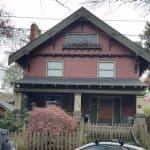
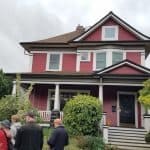
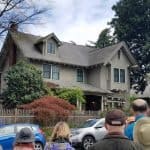
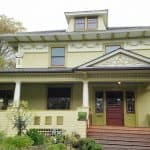
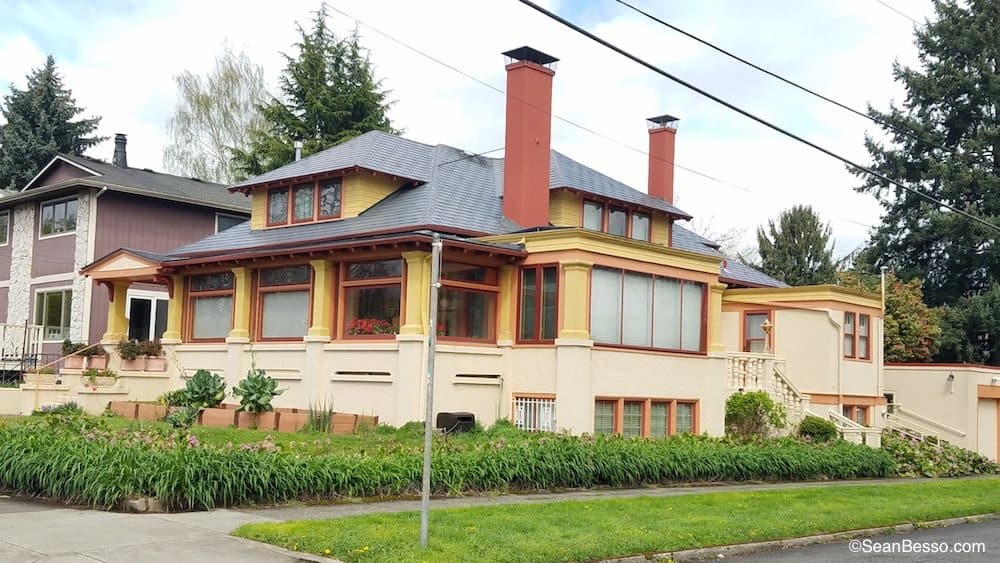
1910 – Builder W. H. Herdman – mix of Colonial and Prairie style built for $9,000. One of the last remaining homes from the original Holladay’s Addition Development.
architectural heritage center walking tour
1908 – Builder Charles Jennings built two Craftsman style homes for his sons. There was some mirroring of English style architecture as well.
architectural heritage center walking tour
1908 – A craftsman style home designed by well-known Chicago architects, Cable and Cable.
architectural heritage center walking tour
1908 – Developer Robert Rice built this home as a speculative (designed to sell, not for individual owner) house, considered Colonial style due to columns.
architectural heritage center walking tour
1917 – Four Square home, commissions by James and Robert Cook, ranchers. 
architectural heritage center walking tour
1904 – Ferdinand Joplin original owner, Four Square style, neoclassical Baroque accents
architectural heritage center walking tour
1906 – Architect Herbert Camp, never been on the market, Harkness family still owns this home since 1906.
architectural heritage center walking tour
Built 1908 – Architect Patterson, Colonial style.
architectural heritage center walking tour
Built 1910 – Colonial style home.
architectural heritage center walking tour
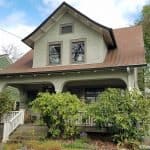
1913 – Graham Woodlaw house. He was a theater owner who owned the Bagdad Theater, along with many other old theaters in Portland.
architectural heritage center walking tour
1906 – Francis Stokes house, early builder in Portland, one of the most commonly used designs in Portland at the time.
architectural heritage center walking tour
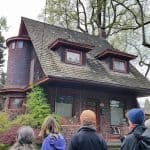
Built 1905 – Norman stairwell inside the “tower”, unique singular design, architect unknown.
architectural heritage center walking tour
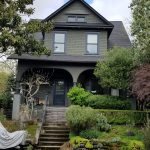
Built 1906 – another example of Francis Stokes house design, with different accents.
architectural heritage center walking tour
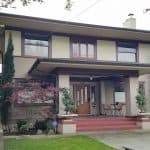
Built 1917 – Stokes and Zeller design, wonderful example of Prairie style house, originally built for Fred A. Cook.
architectural heritage center walking tour
Built 1907 – Henry Heffte design for the Wiggins family. Swiss Chalet style.

Posted in: Architectural Heritage Center, Portland Tagged: Sullivan's Gulch

Post navigation

« What does Oregon’s SB608 mean for investment property owners?
Portland Murals Gallery »

Quick Search

About Sean Besso

Whether you are an experienced investor or a first time buyer, I can help you in finding the property of your dreams. Feel free to browse through my profile and please don't hesitate to reach out for any of your real estate needs! Meet Sean...

Client Reviews

Impressed with his social, professional and articulate manners. Very responsive to requests. Easily explains situations and information in a format that can be quickly understood and processed by individuals outside of the real estate profession. Enjoyed the experience and learned so much.
- Dan Shoop


More Testimonials

Get in Touch

Sean Besso Broker
Licensed in the State of Oregon
2207 NE Broadway Ste. 100
Portland, OR 97232
Call Us: (503) 444-9008
© 2026 · Sean Besso Broker

Privacy

Privacy Policy | Sitemap | DMCA

Agent Reputation | Real Estate Website Design

Marketing | Order Order
Log in