seanbessorealty@gmail.com
    (503) 353-6673

Sean Besso RealtySean Besso Realty

Oregon Real Estate Lives Here

  • About
    • Sean Besso
    • Online Reviews
    • Leave Feedback
  • Buyers
  • Sellers
  • Communities
    • Beaverton
    • Downtown & the Pearl District
    • Happy Valley & Clackamas
    • NE Portland
    • North Portland
    • NW Portland
    • Oregon City
    • SE Portland
    • SW Portland
    • West Linn
  • Blog

PDX Neighborhood Spotlight: North Tabor

Hi Friends!

Welcome to a new segment on the blog where I will highlight various neighborhoods around Portland. First up is my neighborhood: North Tabor. I’ve lived in North Tabor for 25 years, serving the area as a Real Estate Agent for almost 16 years. I guess you can say I really like it here 😉
Now let’s take a deep dive into the neighborhood.

About North Tabor
North Tabor is on the east side of the Willamette River on the northern slope of Mt. Tabor. The I-84 forms its northern boundary, separating it from the Hollywood District, Rose City Park, and Madison South neighborhoods to the north. NE/SE 44th Avenue separates it from Laurelhurst to the west while NE 68th Avenue separates it from Montavilla to the east. East Burnside Street forms most of the southern boundary (separating it from the Mount Tabor Neighborhood), except for a section west of SE 49th Avenue for which SE Stark St. forms the boundary with the Sunnyside neighborhood.*
Not only is North Tabor public transit friendly, the 50s Bikeway Project also extends through the neighborhood.
The North Tabor Neighborhood Association holds Zoom board meetings once a month.


Mural in North Tabor

Rosemont Natural Bluff Area
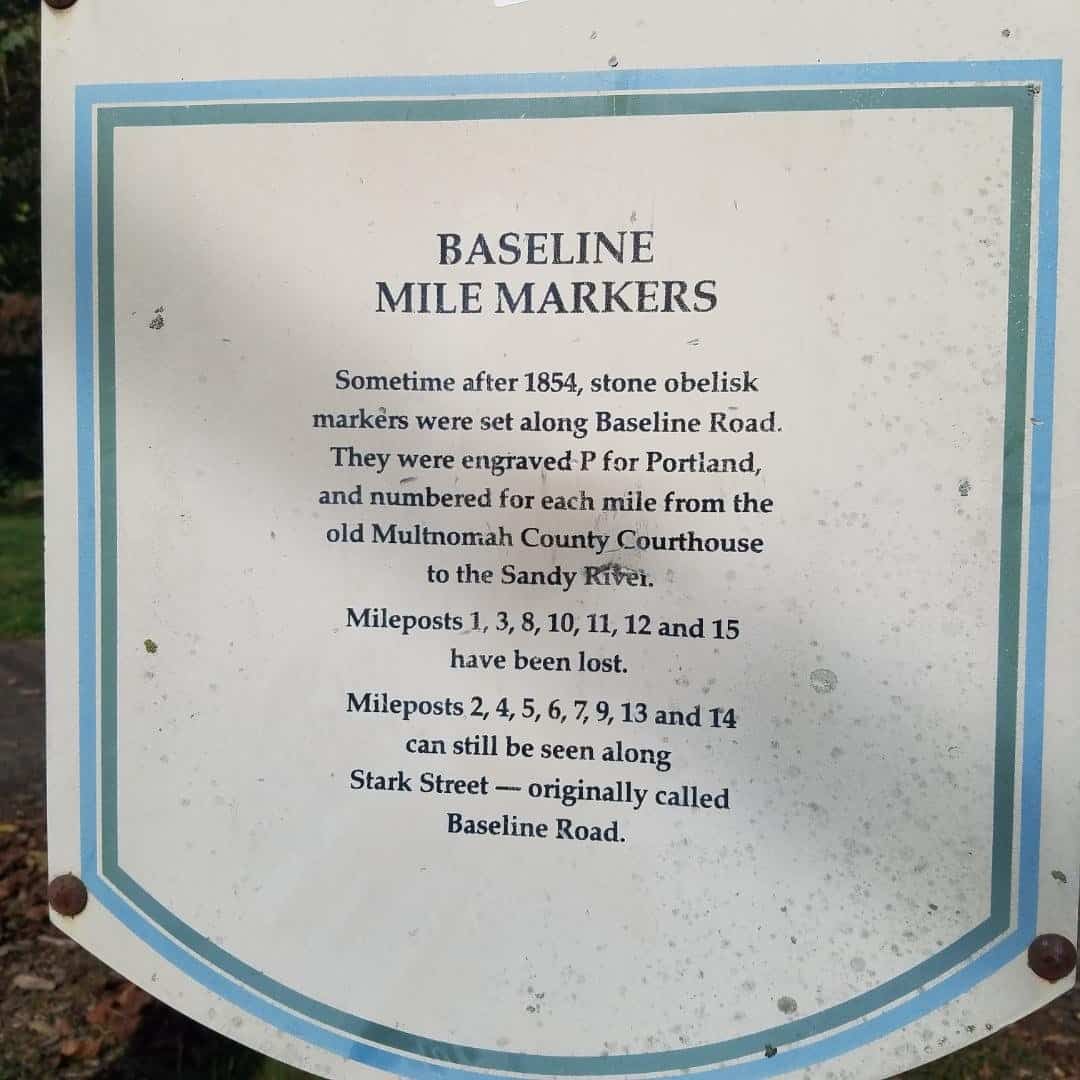
The only official park in the boundaries of North Tabor neighborhood is the Rosemont Natural Bluff Area, which if you drive by you probably won’t realize it’s a park. One of the only remaining Baseline Mile markers from the 1850’s for the original Baseline Road (now SE Stark Street, see my blog post “Surveying Portland, One Marker at a Time”) is at the corner of 61st and Stark.

Food/Drink
Tabor Tavern – The Rib Dinner is awesome!
Big’s Chicken – I love fried chicken, so the Half Bird with Cole slaw is my go-to.
American Dream Pizza – This iconic pizza joint has been around since 1985. My favorite is a large half “Bill Walton”, half “Rat Pack”.

Market Stats
My wife and I love walking from our house up to the top of Mt. Tabor, looking at historic homes (like the Shogren House) along the way. 91 homes were sold in North Tabor last year which is almost double the amount of sold homes from 2019. Right now, the average price of a home in North Tabor is $554,325 with prices ranging from $485,000 – $650,500. It is definitely a seller’s market! Click here for a free home valuation.

Photos of the Shogren House via Shogren House MuseumShogren House via Shogren House Museum

Want to see your neighborhood in PDX Neighborhood Spotlight? Comment below!

References: * Wikipedia

Posted in: Buying A Home, PDX Neighborhood Spotlight, Portland, Real Estate Tagged: food, Neighborhoods, North Tabor, PDX Neighborhoods, Portland, Real Estate, restaurants, Sean Besso

Advantages to Selling a Home in Oregon This Winter

Photo by NeONBRAND via Unsplash

You might have read my previous blog on the advantages to buying a home in Oregon during the winter. The obverse of that article is that there are several compelling reasons to consider selling a home right now, even though winter has not been a particularly popular time to sell.

We are seeing historically low real estate inventory lately not just in the Portland market, but nationwide.

There was a 16% drop in number of homes put on the market in September compared to August. Lower inventory means a more competitive buyer landscape. Why is there a lower inventory? Sadly, one of the reasons is that this year’s wildfires destroyed over 4,000 homes in Oregon. Population growth also factors into a lower inventory. Some people concerned about selling their homes during the pandemic have chosen to hold off. This provides more space for you on the market if you list your home. Here are the precautions I take to ensure everyone’s safety.

Historically low interest rates of below 3% are motivating buyers.

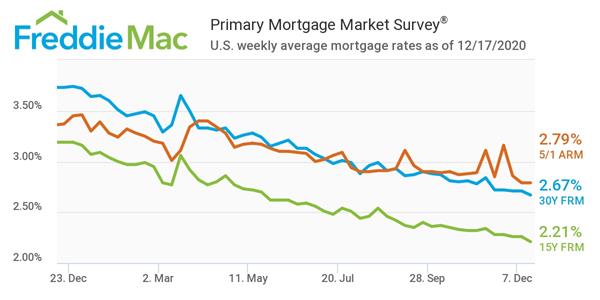
Getting those incredibly low rates shaves off a remarkable difference in what homeowners pay monthly. The Freddie Mac chart below shows the drop in various types of mortgage rates over the past 12 months, bringing us to 2.67% for a 30-year fixed-rate mortgage.

Primary Mortgage Market SurveyÂŽ | U.S. weekly average mortgage rates as of 12/17/2020

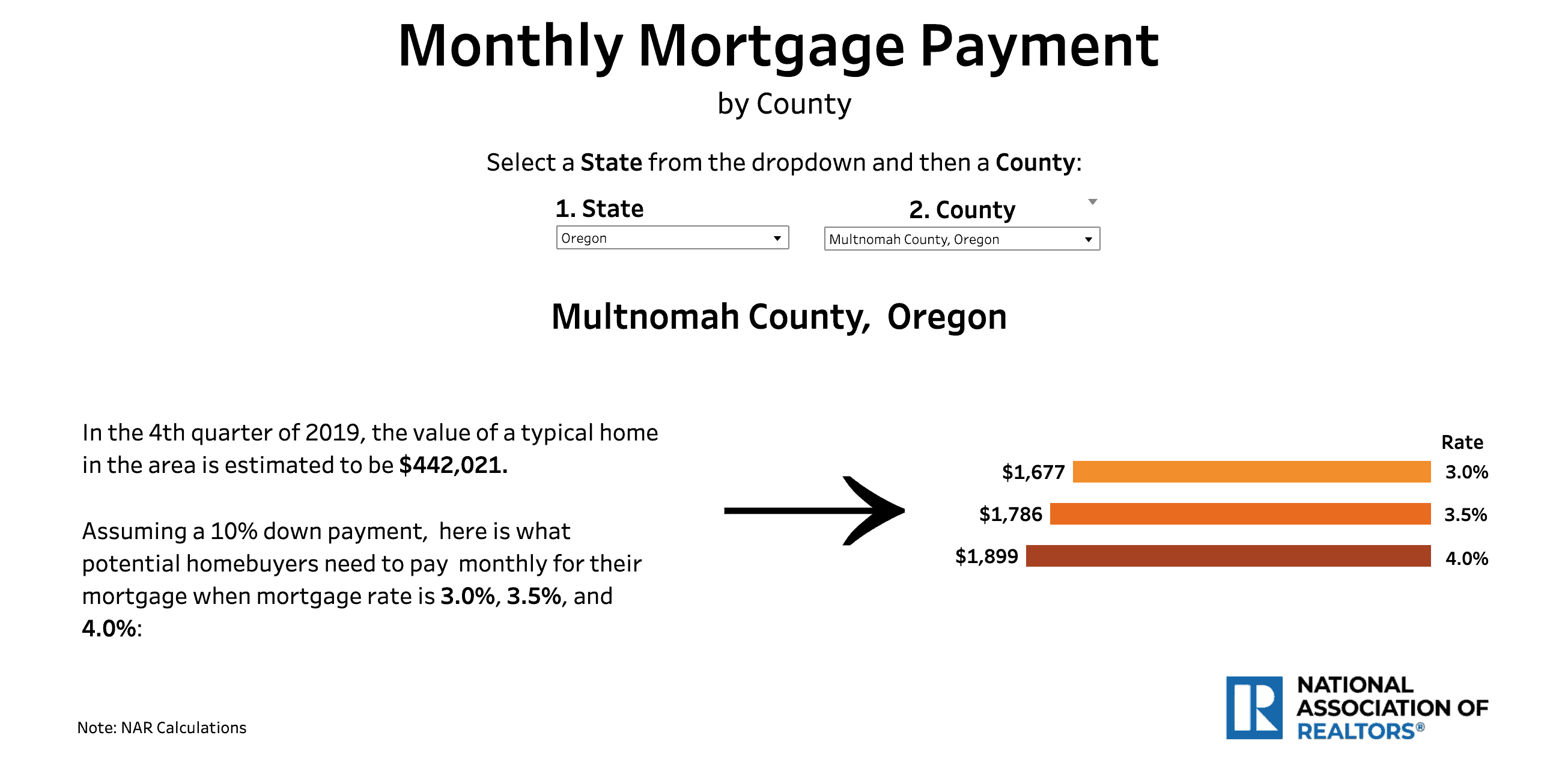
Below is a sample mortgage payment calculation factoring in a 10% down payment with a mortgage rate of 3.0%, 3.5%, and 4.0%. So with today’s historically low interest rates, a buyer’s monthly payment would be even lower.

Monthly Mortgage Payment Comparison (Multnomah County)

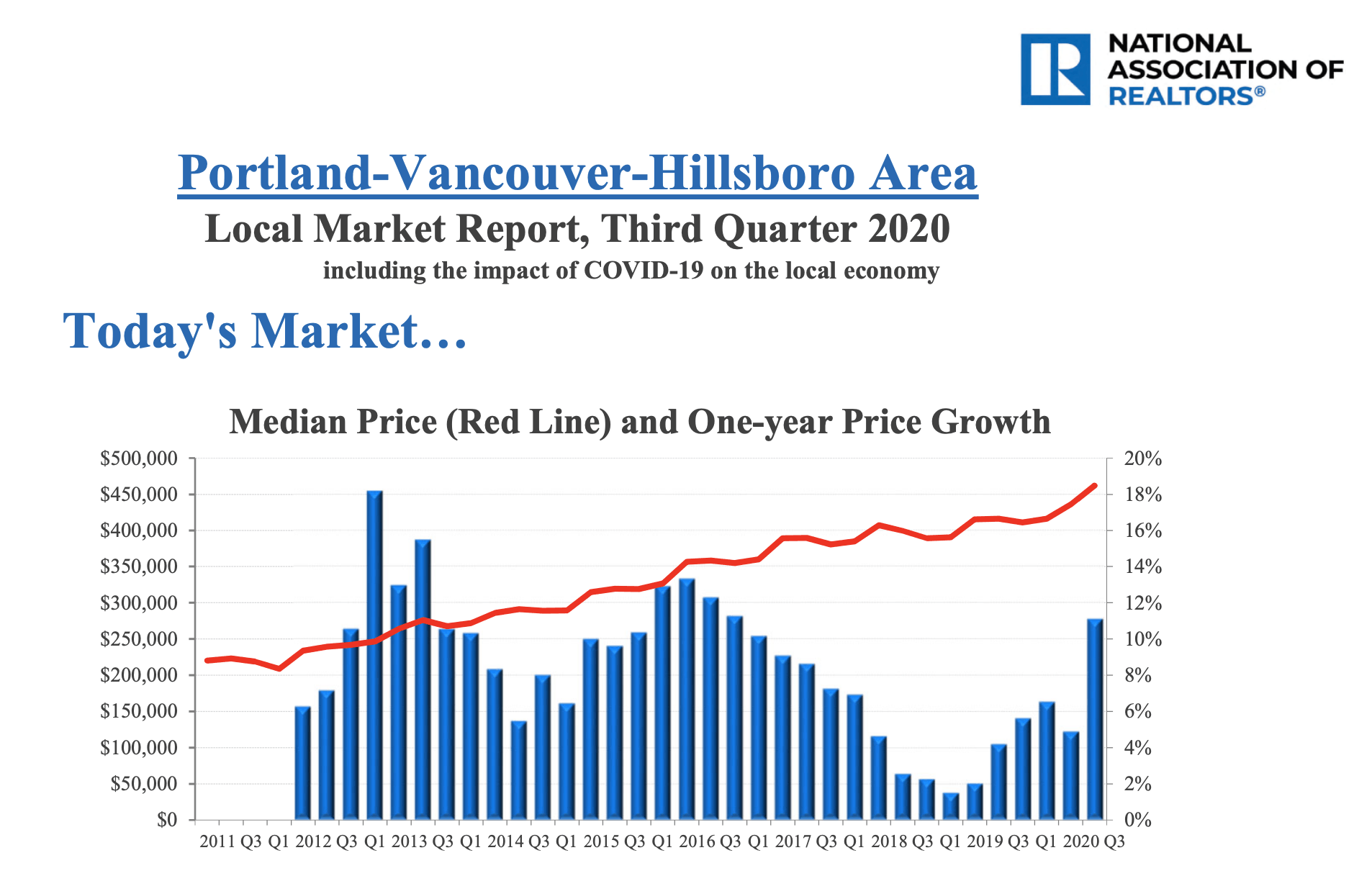
The National Association of Realtors graph below shows us the median price of a home in the Portland Metro area has increased even though we saw a dip in price growth in 2019. The third quarter of 2020 has rebounded considerably. Fourth Quarter 2020 report was not available at time of publishing.

Portland Vancouver Hillsboro Local Market Report – Third Quarter 2020

If you are still on the fence about whether to list now or wait until spring/summer when house hunting is traditionally more lively, contact me today to have a conversation about your concerns. In the meantime, check out my article on being a prepared home seller.

Originally published 12/28/2020

Posted in: Buying A Home, COVID-19, Personal Finance, Portland, Real Estate Tagged: Portland, Real Estate, sellers, selling a home

Eight Things To Do Before Buying A Home

Are you ready to buy a house or condo?

Following are eight steps to prepare for this life change in order of priority. Being prepared paves the way to a seamless transaction.

tiny house with keys

Home Buyer Preparedness Checklist

1. Do Not Make Any Major Financial Changes

When you are getting ready to buy a home, and especially when you are under contract to buy a home, do not make any major changes in your life that affect your financial standing. Don’t switch jobs or do things that could adversely affect your finances, like opening new credit cards. Especially when in the transaction, do not buy a new car, new appliances, or furniture. Wait until after the transaction has closed before making any major purchases or life changes. A credit check alone can affect your credit score and may cause you to lose a home, even days before closing.

2. Get Pre-Approved

Getting pre-approved from a mortgage broker enables you to determine what your price range is, while taking into account what down payment you can afford. While pre-qualification is a good idea, having pre-approval is a better indication of your intent to buy. Realtors love working with pre-approved individuals because it shows you are more serious about buying. If you need a mortgage broker, contact me for referrals.

Many home buyers will look to the financial institution that they bank with as the first option when looking for a home loan. It is not the only option, and sometimes may not be the best solution. Mortgage brokers often have many more (hundreds) of options for finding loan solutions that can fit your needs and save you money. I recommend my buyers not only talk to their bank, but also to a mortgage broker and credit unions. Make sure that at least one is a local lender, as they can also know about special state and local lending programs that national lenders may not be aware of.

3. Make a “Dream List”

Compose a list of your requirements for the place you want to buy. Divide the list into things that are deal breakers and factors that are more flexible:

  • Is the school district a priority over your commute (if you have one)?
  • What about walkability score and access to services?
  • Or are you looking for a property that is more remote, because you want the acreage?

Having a defined list of “wants” will provide a clear vision of the property you seek and help your broker in searching out the best options for you. Work with your realtor on this list, and understand that often this list will evolve over the time of your search based on market inventory, price of the house, and other market factors. Browsing listings online can also help. Stop by open houses and drive to locations that you see in your online previews to start narrowing down those search parameters. Check out the property during the day and at nighttime, too.

4. Get A Referral And Start Discussions With A Buyer’s Broker

A buyer’s broker will provide you single agency representation. Oregon does allow for “dual agency”, where a seller’s listing broker can write an offer on their seller’s property for you. Remember though, that the listing broker has a contract with that seller and has a fiduciary responsibility to the seller. Working with a buyer’s broker offers you a real estate professional who has your best interests in mind in the transaction, guiding you through negotiations, inspections, and the entire home buying process. A broker can also help you research market conditions so you can understand the cost of homes in the vicinity of where you’d like to buy. Having comparable sales information helps determine how much to offer on a home.

5. Making An Offer

Once you’ve found a house you like, you’ll work with your broker to make an appropriate offer. Familiarize yourself with the process so you know what to expect. A good buyer’s broker can offer you referrals for home inspectors, contractors, or other professional services. Collect three referrals for each service. Home inspectors help identify any underlying issues your home may have, such as problems with the the roof, plumbing, or electrical system. There is an “Inspection Contingency Period” in Oregon real estate transactions. This is usually a period of ten business days to allow for a whole home inspection. The inspection report helps determine if it’s the right home for you and whether you want to negotiate needed repairs and/or a better price.

6. Home Insurance

Homeowner’s insurance is required when you purchase a home. Shop around to find the best rates. Bundling your home, auto, and other insurance can also be a way to save money.

7. Managing A Contingency Purchase

A contingency purchase is when you want to buy, but your purchase is contingent upon the sale of your home. In the low-inventory market we are experiencing in the Portland Metro area, many people who are looking to sell and then buy again are finding it challenging. Offers where there is a contingency of the sale of a home are at a disadvantage when up against offers that don’t have a home to sell. When the client feels comfortable releasing their contingency, and if selling first, then renting until finding a new home is also an option.

8. Organize Your Household Contents

Start sorting your personal effects now. You have more stuff than you realize, guaranteed. Getting started on purging before packing will enable an efficient and less stressful move.

If you’re also selling, check out my Sellers Checklist. Contact me today to get the conversation going!

Published October 13, 2020


Posted in: Buying A Home, Condominiums, Investment Property, Personal Finance, Portland, Real Estate

Home Seller Preparedness

Selling a home involves many moving parts, so it’s best to be proactive. Start planning upwards of 6 months ahead to avoid rushing at the last minute to complete deferred maintenance repairs, consider your next living arrangement, and be able to time the marketing strategically to local market conditions. Deferred maintenance can affect not only the value of what your home can sell for, it can also affect your time on the market. If you plan on selling without taking care of maintenance that you have not done on the home, then be prepared to price your home accordingly. Getting these critical components in place prior to listing could enhance the value of your home, ensure a smoother listing experience, and mitigate buyer negotiation leverage once you accept that offer.

Create a punch list of repairs.

Using an Excel spreadsheet, a pad of paper, or your smartphone or tablet, go room by room identifying what repairs are needed.

    1. Windows open and close easily.
    2. Install GFCI certified outlets.
    3. Doors close and doorknobs turn easily.
    4. Chipped or nicked trim?
    5. What else?

Perform a deep clean

Closets, oven, range, refrigerator (pull it away from the wall to vacuum the coils), carpets/hardwoods, windowsills, chandeliers/fixtures all need attention.

Hire a professional painter

Liven up the walls and doors inside and outside with fresh paint. When you’ve lived in a place for a while, your mind begins to ignore little inconsistencies. A new visitor to your home will notice these details, so keep in mind they contribute to the overall first impression. A professional painter can help repair cracks in ceilings and walls as well.

When getting your interior or exterior ready to be painted, think base colors like creams and whites for your paint colors at time of sale. You may love that purple colored room for your own use, but these more extreme colors can influence a buyer’s interest in your home. Provide the new buyer with a fresh palette to introduce their own color scheme to their new home. This one preparation can save you on market time, putting more money in your pocket at closing.

Install new smoke and carbon monoxide detectors

Oregon law requires new detectors to be installed. There are some affordable smoke and carbon monoxide detectors available at your local hardware store.

Landscaping

It’s all about curb appeal! The first impression is usually the last.

  • Prune, weed, clear brush, mow, lay down fresh bark mulch.
  • Hire an arborist to shape existing trees (never refer to it as “thinning” a tree). In fact, this should be done even if you’re not selling!
  • Having a tidy home on the outside bodes well for the inside.

Assess the roof

One of the most overlooked components of selling a home is the roof condition. Inspectors will assess the condition of the roof after you receive an offer, so if repairs or even replacement are necessary, it will mitigate the need for negotiation on the price of your home while saving time on repairs already completed.

Organize Documents

Have your paperwork and invoices available for work you’ve had done on your home. If you had work completed by a contractor that required a permit, verify all permits were finalized with your local bureau of planning and permitting. You don’t want to get into a transaction on your home and have an open or voided permit come into question. If a final inspection was not completed, you may have to open walls, cut into sheet rock, or pull up flooring so as to prove to a city inspector that work was done to code. Avoid a potential nightmare in the middle of a real estate transaction.

If selling a condo, line up all your HOA governing documents and proof of insurance. Your management company may have a login to access documents electronically. Request access for your yourself and your agent, so a tedious yet critical detail is taken care of in advance.

Appliance Check

Ensure all appliances are in clean and working order. If there are any dings to the enamel, thermometer adjustments needed in the oven, thaw a freezer, replace the dryer lint filter, or anything else you find, these will be good to have taken care of before people start viewing your home.

Staging

Consider coordinating a staging company with your broker as the final step in preparing to sell. Staging will showcase your home to people who may not have an imagination or need a physical visual in order to imagine themselves having the lifestyle you’re selling. Part of staging involves decluttering and depersonalization. You want the new buyer to imagine themselves in your home, not what it was like for you to live there. Another side benefit? Packing up personal items saves you time for when the real move happens.

Photography

Use a professional real estate photographer. They have the digital technology to deal with minor touch-ups, enhance lighting, and streamline your photos for use in virtual tours and/ or 3D tours.

Pricing your home

Your broker should provide this “apples to apples” home sales comparison of properties within a mile or less and over the last 3-6 months. This information helps determine the best listing price. Keep in mind the market determines the actual sales value of your home.

Strategy

Pricing your home too high can cause the home to stagnate on market and necessitate a price reduction. Don’t wait too long to consider a price reduction if showing activity is not producing an offer. If you have been seeing double-digit numbers in showings without an offer, then a price reduction should happen within a few weeks. Perception is reality. If buyers see a home on market for more than a few weeks, their perception can be that there is something wrong with the home.

Portland is also known as a “polite market” where buyers will usually not make offers on homes they think are overpriced, so as to not upset the seller with a lower offer. Buyers in the Portland Metro area will often wait for the seller to make a price reduction before submitting an offer. Real estate values can be unpredictable, so keep an eye on factors like the state and national economy, unemployment rate, interest rates, and other factors.

Showings

Be ready to accept raw feedback about your home. You have memories and emotions attached to your property, so it’s best to remember to try to not take constructive criticism personally.

Create a showing schedule with your real estate broker that works both for you. Maximize the availability of the home to buyers to see your home, such as evenings, after work, and weekends.

I’d love to learn more about what your greatest challenges have been when selling your home. Did I miss anything on this list? I look forward to hearing from you.

Published September 10, 2020

Posted in: Condominiums, Home Improvement News, Personal Finance, Portland, Real Estate Tagged: sellers, selling a home

Surveying Portland, One Marker At A Time

Ever wonder how a lot that a house or condo complex sits on came about in the Portland metro area?

I was walking in Southeast Portland recently and noticed a stone marker near Lone Fir Cemetery. Curious about it, as it clearly wasn’t a headstone, I discovered that it is one of many old survey markers in the area. My thirst for history, as always, lead me on an inquisitive search for more information.

One of the cemetery boundaries used to be called Baseline Road. You may now recognize it by its current name, Southeast Stark Street. It is named for the baseline of the Willamette Meridian (see photos at end of this article), which runs east to the Idaho border and west to the Pacific Ocean. The Willamette Meridian was established in 1851 by Oregon’s first Surveyor General, John B. Preston. According to the Oregon Encyclopedia, the “Willamette Meridian was selected as the only principal meridian necessary to survey all of what is now Oregon and Washington.” This designation is the basis for all Pacific Northwest land surveys to this day.

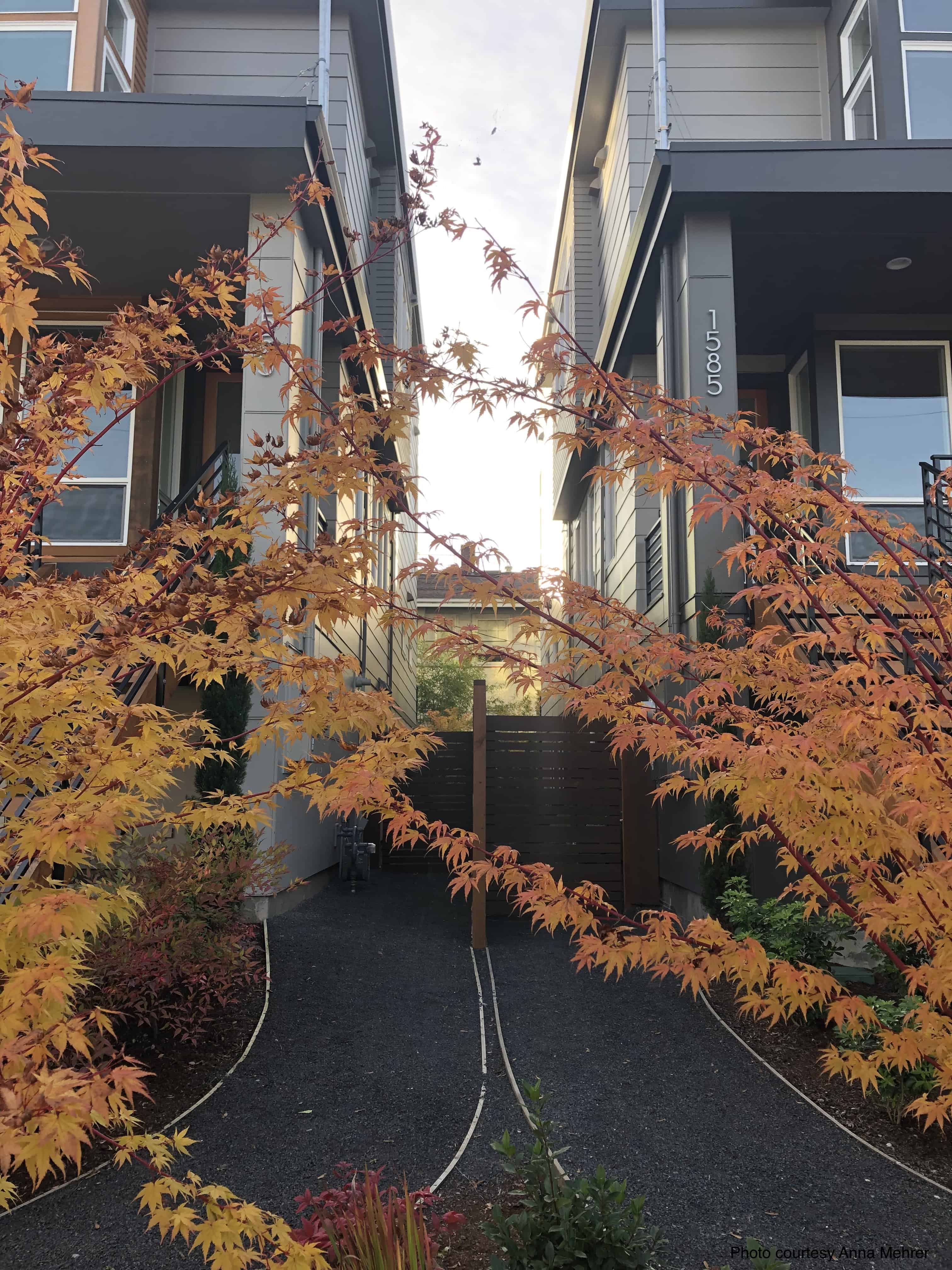
two buildings close together with fall leaves in front

why is this relevant to you?

If you want to modify something on your property, such as putting up a fence, it’s always a good idea to check your property’s plat to verify the legal boundaries. Sometimes a neighbor has something built beyond the boundary, and depending on conditions such as use of land or other factors, adverse possession may be enforced. Adverse possession is different from an easement. An easement is a legal allowance for access to property, such as allowing Comcast to provide cable lines up to your dwelling. If you would like to have a property properly surveyed, you should hire a Professional Land Surveyor who is licensed by the state.

Resources

SAIL – Survey and Assessor Image Locator is a place to find survey certificates for an address in Multnomah County. This ESRI map provides more detailed information on property boundaries than PortlandMaps.com.

Professional Land Surveyors’ Guide to Selecting an Oregon Land Surveyor.

To look up a license of a land surveyor, the state website advises to call their office at 503-362-2666 to get the most accurate information.

Posted in: Investment Property, Portland, Real Estate

Landlord-Tenant Law in Portland, Oregon

July 12, 2019

puzzle pieces in shape of house reflect landlord tenant law in oregonAre you a homeowner who rents your property for residential use?

The recent landlord-tenant law changes in Oregon, and Portland specifically, might have you wondering where you stand. The correlation between housing costs/availability and the homeless crisis has spurred lawmakers of the state and City of Portland to enact legally enforceable regulations regarding rent increase caps, no-cause eviction notification timelines, and sizeable penalties for such violations. One thing is for certain: the tenant-landlord regulations are more stringent, making it more important than ever for small-time landlords to know how to properly navigate them.

If you own four or fewer rental properties, you need to know that in some no-cause eviction cases, you will want to file an exemption and have it approved prior to providing your tenant a 90-day notice to vacate. The city lists those 12 exemptions on its website (also below). True to form, the devil is in the details, including times. An eviction notice should have not just the vacancy deadline date, but the time as well. For example, state: “November 1, 2019 by 11:59 pm.” Better yet, hire a rental management company who can help you with the details. Otherwise, you will want to review your options with a legal professional before making any decisions. In the meantime, here is a starting point for navigating the new regulations as they pertain to landlord-tenant law in Oregon and the City of Portland.

Oregon Senate Bill 608 summary reads:

Prohibits landlord from terminating month-to-month tenancy without cause after 12 months of occupancy. Provides exception for certain tenancies on building or lot used by landlord as residence. Allows landlord to terminate tenancy with 90 days’ written notice and payment of one month’s rent under certain conditions. Exempts landlord managing four or fewer units from payment of one month’s rent. Provides that fixed term tenancy becomes month-to-month tenancy upon ending date if not renewed or terminated. Allows landlord to not renew fixed term tenancy if tenant receives three lease violation warnings within 12 months during term and landlord gives 90 days’ notice. Limits rent increases for residential tenancies to one per year. Limits maximum annual rent increase to seven percent above annual change in consumer price index. Requires Oregon Department of Administrative Services to publish maximum annual rent increase percentage.

There are 12 exemptions for landlords who otherwise would be required to pay relocation assistance in the City of Portland.

  1. Rental Agreements for week-to-week tenancies.
  2. Landlords whose Principal Residence is in the same Dwelling Unit as the Tenant. *
  3. Landlords whose Principal Residence is in the same Duplex as the Tenant. *
  4. Tenants who live in an Accessory Dwelling Unit (ADU) on the same property as the Landlord.
  5. Landlords who temporarily rent out their Principal Residence during an absence of 3 years or less. *
  6. Landlords who temporarily rent out their Principal Residence during an absence due to active duty military service. *
  7. Termination of a Rental Agreement so the Landlord can move an immediate family member into the Dwelling Unit.  The immediate family member CANNOT be the Landlord, their spouse, or any person who has been an owner of the Dwelling Unit within the past 12 months.
  8. Dwelling Units regulated by federal, state or local governments as Affordable Housing for a period of at least 60 years.
  9. Dwelling Units undergoing acquisition, rehabilitation or demolition for federally funded projects subject to the Uniform Relocation Assistance and Real Property Acquisition Policies Act of 1970.  These Dwelling Units are subject to federal, rather than city, relocation assistance laws.
  10. Dwelling Units rendered immediately uninhabitable NOT due to the action or inaction of the Landlord or Tenant.  Such events include, but are not limited to, natural or human-caused disasters.
  11. Dwelling Units rented for less than 6 months while subject to a demolition permit submitted BEFORE the Rental Agreement began.
  12. Dwelling Units where the Landlord provides a fixed-term Rental Agreement (example: 1-year lease), notifying the Tenant in writing BEFORE the Rental Agreement began that upon expiration of the lease the Dwelling Unit would be sold or permanently converted to a use OTHER THAN as a Dwelling Unit subject to Oregon’s Residential Landlord and Tenant Act.

*See Interim Administrative Rules for definition of principal residence.

Re-printed from PortlandOregon.gov

Rental Cap

Most importantly, the rental cap in Portland is ~7% plus prime (about 10% as of this publish date). How likely are you to rent or sell your investment property because of the landlord-tenant laws? Do you think these laws will affect the housing market in any way? Will renters have fewer options if landlords sell? Will future renters be protected by rent that has already seen historically high rates? As usual, time will tell. In the meantime, protect your investment by knowing what the rules are. If you are not in Portland, Oregon, please check with your city’s ordinance for particular Acts relating to landlord-tenant law.

Ordinances and codes are subject to change. I am not an attorney and may not dispense legal advice. Please contact me if you would like a referral to an attorney.

Posted in: No-Cause Evictions, Portland, Real Estate Tagged: landlord-tenant law, no-cause evictions, Oregon Senate Bill 608, SB608

5 Oregon Real Estate Contract Changes You Need to Know Now

woman biting pencil in front of laptopOne of the many things I respect about Oregon Realty Company, our brokerage, is that management makes every effort to protect our clients. One of the ways they do this is by conducting an annual forms review training session with our brokers. Laws and regulations, like in any industry, are always subject to change. As concerns arise, the regulations evolve. This year’s Annual Forms Review was presented by Richard Mario of Buckley Law P.C. Mr. Mario has been with Buckley Law since 1989.  Admitted to both state of Arizona and Oregon State Bars, he practices from his Lake Oswego office. If anyone knows real estate disputes, it’s Richard Mario.

If you’ve ever purchased a home, you know there is an extensive, detailed, 11-page sales contract. With my track record of almost 15 years of real estate experience, I have helped clients navigate the wordy waters of contracts. Most recently, I had a situation where a buyer made an offer, then withdrew it, and because the buying party’s broker (not affiliated with my company) was not up to speed on latest contract laws, the buyers lost their earnest money when a deadline was not met. I encouraged the other agent to provide a timely response, but I discovered the agent was not aware of the new law. We all want sales and purchases to happen seamlessly, so it is in everyone’s interests to work cooperatively.

1. OREF 093 FIRPTA

One example of a recent law change pertains to FIRPTA. The Foreign Investment in Real Property Tax Act of 1980 is a tax law that imposes a 10-15% gross sales tax on foreign persons disposing of US real property interests. For instance, if you’re my client, and regardless of whether you are an American citizen or not, and you are selling the property you own, you would need to fill out the form and submit it to a title company. The law states I can only provide you with the form, but not help fill it out. My next step is to confirm the form has been submitted to the title company, so that the buyer may proceed with writing an offer. Two additional documents are required for submittal to be compliant with federal law.

2. OREF 011 Condo Sale Agreement

There is now a hard date for the delivery and review period for buyers and sellers. Previously, there was a flexible deadline. Extensions to the review period must be written and agreed to. Condo documents should be gathered by the seller prior to the agreement to maximize the time for review. If the buyer does not have ample time to review documents, the sale could be postponed and then the process would need to start all over again. It is recommended to state which documents were provided and that no other documents are available. When a hard deadline is set and the deadline is missed, your broker will need to submit a new offer. This is reflected due to a change in 2018 with regards to the offer deadlines as stated in OREF 001 Residential Sale Agreement.

3.  OREF 083 Contingent Right to Purchase

“…buyer may not accept an offer contingent on the sale of the Offeror’s property without written permission of the Seller”
This wording in the agreement prevents contingency chains of sale. Previously, for example, Bob could sell his home to Sally, as long as Sally could sell her home to Joe, as long as Joe could sell his home to Alicia, and so on. The new language prevents this situation from happening.

4. OREF 070 Investment Property Addendum

A few lines were reformatted for readability and ease of understanding. Three sections were removed and combined in the Document Review period (note the hard date where a written extension is required).

5. OREF 007 Commercial Sales Agreement

There are numerous nuanced changes in this section, but perhaps most notable is the section where personal property transfers require the use of a Bill of Sale. There are tax implications. For example, if you were to buy a fully-stocked grocery store, you would need a Bill of Sale to transfer the contents of the store to your ownership. Otherwise, you only own the building.

These changes are five of over 25 sections we learned about. I am not a real estate attorney, so I cannot provide legal advice. However, I have the resources to call upon the experts whenever a situation may be in question. I advocate for you, so you may focus on enjoying your new home and prosper.

Photo: JESHOOTS.COM

Posted in: Condominiums, Real Estate Tagged: FIRPTA, Richard Mario

Posts navigation

  • « Previous Page
  • 1
  • …
  • 5
  • 6
  • 7

Quick Search

About Sean Besso

Whether you are an experienced investor or a first time buyer, I can help you in finding the property of your dreams. Feel free to browse through my profile and please don't hesitate to reach out for any of your real estate needs! Meet Sean...

Client Reviews

Impressed with his social, professional and articulate manners. Very responsive to requests. Easily explains situations and information in a format that can be quickly understood and processed by individuals outside of the real estate profession. Enjoyed the experience and learned so much.
- Dan Shoop


More Testimonials

Get in Touch

Sean Besso Broker
Licensed in the State of Oregon
2207 NE Broadway Ste. 100
Portland, OR 97232
Call Us: (503) 444-9008
© 2026 ¡ Sean Besso Broker

Privacy

Privacy Policy | Sitemap | DMCA

Agent Reputation | Real Estate Website Design

Marketing | Order Order
Log in