seanbessorealty@gmail.com
    (503) 353-6673

Sean Besso RealtySean Besso Realty

Oregon Real Estate Lives Here

  • About
    • Sean Besso
    • Online Reviews
    • Leave Feedback
  • Buyers
  • Sellers
  • Communities
    • Beaverton
    • Downtown & the Pearl District
    • Happy Valley & Clackamas
    • NE Portland
    • North Portland
    • NW Portland
    • Oregon City
    • SE Portland
    • SW Portland
    • West Linn
  • Blog

Steps to Homeownership: Spring Clean Your Finances

The Spring season is in full swing, and it’s time to wipe away the dust and grime from winter. But this physical and mental refresh doesn’t just apply to your home. Use these seven steps to clean up your finances!

Refresh Your Budget

    • Start to make a budget by gathering your bills and pay stubs. When you have your bills and pay stubs:
      • Step 1: Make a list of your bills and other expenses and the amounts. Bills include things like rent, electricity, water, or telephone service. Expenses are things you spend money on, like food, gas, clothes, and entertainment.
      • Step 2: Use your pay stubs to write down how much money you make each month. This is called income. Also include any other money you get, like child support.
        • Some people don’t get paid every month. If you don’t get paid every month, use your income from last year to estimate your monthly income. Add all your income last year. Then divide that number by 12 to find a monthly income estimate.
      • Step 3: Subtract your monthly bills and expenses from how much money you make in a month. This number should be more than zero. If the number is less than zero, you’re spending more money than you make. Look for things in your budget you can change.

Review Your Credit Report

    • To review your credit report, you can request a free copy from AnnualCreditReport.com. This website is authorized by the Federal government and provides free annual credit reports from Equifax, Experian, and TransUnion. You can usually access your report immediately after verifying your identity. 

Take Inventory of Your Debt

    • To effectively take inventory of your debt, first gather all your financial statements and credit reports, then create a detailed list of all your debts, including balances, interest rates, and monthly payments. Next, track your income and expenses to understand your financial situation and identify areas where you can cut back to free up more money for debt repayment. Finally, choose a debt repayment strategy that aligns with your financial goals and track your progress. 

Bolster Your Emergency Fund

    • To effectively bolster your emergency fund, start by setting a specific, achievable goal, such as saving $1,000 or covering three to six months of essential expenses. Then, consistently save by automating transfers from your checking account to your savings account. Additionally, explore ways to increase your income, cut expenses, and save any unexpected windfalls. 

Boost Your Retirement Investing

    • If you’re just beginning to put money away for retirement, start saving as much as you can now. That way you let compound interest — the ability of your assets to generate earnings, which are reinvested to generate their own earnings — have an opportunity to work in your favor. Open/contribute to a 401 (k) account and consider establishing an individual retirement account (IRA) to help build your nest egg.

Maximize Your Credit Card Rewards

    • To maximize credit card rewards, choose cards that align with your spending habits, earn welcome bonuses, pay off balances in full each month, and leverage bonus categories and redemption options. Understanding your spending patterns and the rewards structures of different cards is key to maximizing your earnings. 

Revisit Your Financial Goals

    • To effectively revisit your financial goals, regularly assess your current financial situation, adjust your goals based on life changes, and prioritize those that remain relevant. This includes reviewing your budget, checking emergency funds, and ensuring you’re on track with your long-term goals, like retirement planning. 

Until next month!

Posted in: Buying A Home, Personal Finance, Portland, Real Estate Tagged: Checklist, Financing, Home Buying, Home Tips, Homeownership Tips, Portland, Real Estate, Sean Besso, Spring, Steps to Homeownership

Festive Decorating Ideas for Small Spaces

You don’t need much to make your home feel like a winter wonderland this holiday season. Here are few ideas to help you decorate any space in your home – no extra large christmas tree required!

Snuggly Bedding

    • Now is the time to bust out those cozy flannel sheets and warm plaid blankets! Place a warm fuzzy blanket on your sofa along with some holiday throw pillows and voila – easy festive living room decor!

Mantle Decorations

    • A simple green garland that can be purchased at any garden center or local tree farm looks holiday-ready when draped over your mantle. Add candles (battery operated is recommended), twinkle lights, nutcrackers, pine cones, etc. for a little extra holiday cheer.

Pine Cone Garlands

    • Speaking of garlands and pine cones, why not combine the two? Whether you buy pine cones or forage your own, you can elevate them with brushed on gold leaf. Attach them to some rope for a rustic natural feel and drape them across your mantle, entry or doorways.

Hot Beverage Bar

    • Nothing says cozy winter time like a specific station set up for hot drinks. A tray stocked with the makings of your favorite hot beverage is sure to be a hit at any holiday gathering. Use an insulated thermos to keep hot drinks toasty, and prop up a sign to let guests know what’s on tap. Garnish with marshmallows, candy canes, and cinnamon sticks.

Branch in a Vase

    • This may seem very simplistic, but trust me when I say it can be a huge statement piece in any space. Take a fresh cutting from a tree outside and place it in a large jar with cold water. Surround it with white candles or even tiny presents. If you don’t have the space for a large christmas tree, this is a great alternative. It’s simple, beautiful, and very hygge (a mood of coziness and “comfortable conviviality” with feelings of wellness and contentment).

Holiday Books

    • By strategically placing your favorite holiday books beneath a glass-top coffee table or propped up between bookends on a console table, you create fun and personalized holiday decor. Try using vintage children’s picture books or holiday classics like “Little Women” or “A Christmas Carol”.

Sprig of Red Berries

    • This is one of the most cost effective ways to decorate for the holidays. Take some red berry sprigs and pop them in a glass or ceramic vase you already own. Not only does this bring color to any room in your home, it also brings warmth. Try placing them on your mantle, in your powder room, bookshelves, or on bedside tables.

Chalk Art

    • Transform a chalkboard or a chalkboard painted wall into a holiday prop. Draw a wintry scene or a christmas tree. You can even place some wrapped gifts under your hand drawn christmas tree for added decor.

Mini Wreaths in Your Window

    • You can find mini wreaths at craft stores or even create some of your own. Hang an assortment of wreath sizes from your window with red ribbon at different lengths for a stunning effect that works great indoors and outdoors.

Advent Garland

    • Kids or no kids, advent calendars can be a lot of fun! Have a pet? Consider filling it with toys and treats for your furry best friend. These festive calendars look great hung up on a blank wall, banister or above your mantle.

Posted in: Buying A Home, Investment Property, Personal Finance, Portland, Real Estate Tagged: Home Buying, Home Buying Process, Home Tips, Portland, Real Estate, Sean Besso

Home Buying at a Glance

A lot goes into buying a home! To make things a little easier to understand, here is a quick overview so you are prepared and have an idea of what to expect when it’s time for you to buy. 

Decide on a Budget for Your Purchase

    • One of the most important steps of the home buying process is figuring out what your budget is. During this process, you’ll want to start talking to lenders, finding out about interest rates, obtain pre-approval letters. Your lender will help you figure out your debt-to-income ratio and what kind of loan you qualify for. While deciding on your budget, keep in mind that HOA dues, property taxes, homeowner’s insurance and private mortgage insurance can all factor into your monthly mortgage payment.

Pick a Location

    • Do some research on various neighborhoods and find out what area you think would suit you best. Make a list of priorities you need in a neighborhood – Do you need a shorter commute? What about school districts? Would you rather be close to shops, restaurants, grocery stores, etc. or in a more secluded area? These are all things to consider when figuring out the best location for you to call home.

Find “The” Home

    • And don’t skip out on asking your Realtor for help (and hopefully that Realtor is me 😉)! Home search websites are great and all, but sometimes the information can be out of date and because they use algorithms, you might not see all of the listings in the location you are looking for. Realtors have various tools not available to the public and they have access to the Regional Multiple Listing Service – the largest real estate listing database in the area. Realtors can keep you in the loop of the newest listings that specifically fit your needs and wants of your future home. Once you’ve found “the one”, it’s time for your next step!

Do Your Due Diligence

    • Find out as much information possible about the home. See if HOA dues apply and how that’ll affect your mortgage payments. Was a home inspection done prior to the house going on the market? If so, review it and make sure the condition of the home is to your liking. In most cases, sellers will fill out a “Seller’s Property Disclosure Statement”. This form discloses information about the property that the seller is aware of. If it has already been provided by the listing agent, go over it with your Realtor and see if anything on the disclosure statement raises any red flags. Think about any renovations and repairs you might want to do to the home and decide whether or not that fits into your budget.

Make an Offer

    • It’s offer time! After doing your due diligence, discuss with your Realtor the amount you should offer for the home. Depending on the market, your offer price might be higher or lower than the listing price. In a highly competitive market, offer prices are usually higher than the listing price. Your Realtor will write up the offer for you to sign and submit it on your behalf to the seller’s agent.

Finalize and Close

    • You just got a call that your offer has been accepted! But now what? Normally after your offer is accepted, you will need to act out certain terms and conditions of your offer. That typically includes providing your pre-approval letter or proof of funds, depositing your earnest money deposit, reviewing the title report and disclosures, schedule a home inspection and have your lender order an appraisal. Once all of the contingencies and terms have been met, you are on your way to closing! Prior to closing, you will receive a final settlement statement from title detailing your closing costs and a closing disclosure from your lender detailing your monthly mortgage payments. Closing will take place on the day specified in your offer contract and you can either sign at the title company where you are closing or you can sign digitally. Once title receives your funds to close, you will sign your closing documents and then move forward with possession. The possession date can either be the same day as closing or it could take place after closing depending on what is spelled out in your contract. During possession, you’ll receive the keys to your new home and VOILA! You’ve successfully gone through the grueling home buying process and are now a homeowner!

Posted in: Buying A Home, Investment Property, Personal Finance, Portland, Real Estate Tagged: Home Buying, Home Buying Process, Home Tips, Portland, Real Estate, Sean Besso

Advantages to Selling a Home in Oregon This Winter

Photo by NeONBRAND via Unsplash

You might have read my previous blog on the advantages to buying a home in Oregon during the winter. The obverse of that article is that there are several compelling reasons to consider selling a home right now, even though winter has not been a particularly popular time to sell.

We are seeing historically low real estate inventory lately not just in the Portland market, but nationwide.

There was a 16% drop in number of homes put on the market in September compared to August. Lower inventory means a more competitive buyer landscape. Why is there a lower inventory? Sadly, one of the reasons is that this year’s wildfires destroyed over 4,000 homes in Oregon. Population growth also factors into a lower inventory. Some people concerned about selling their homes during the pandemic have chosen to hold off. This provides more space for you on the market if you list your home. Here are the precautions I take to ensure everyone’s safety.

Historically low interest rates of below 3% are motivating buyers.

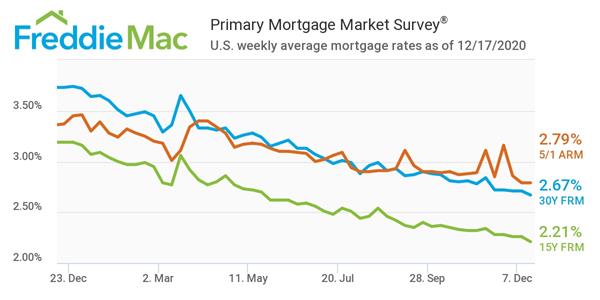
Getting those incredibly low rates shaves off a remarkable difference in what homeowners pay monthly. The Freddie Mac chart below shows the drop in various types of mortgage rates over the past 12 months, bringing us to 2.67% for a 30-year fixed-rate mortgage.

Primary Mortgage Market Survey® | U.S. weekly average mortgage rates as of 12/17/2020

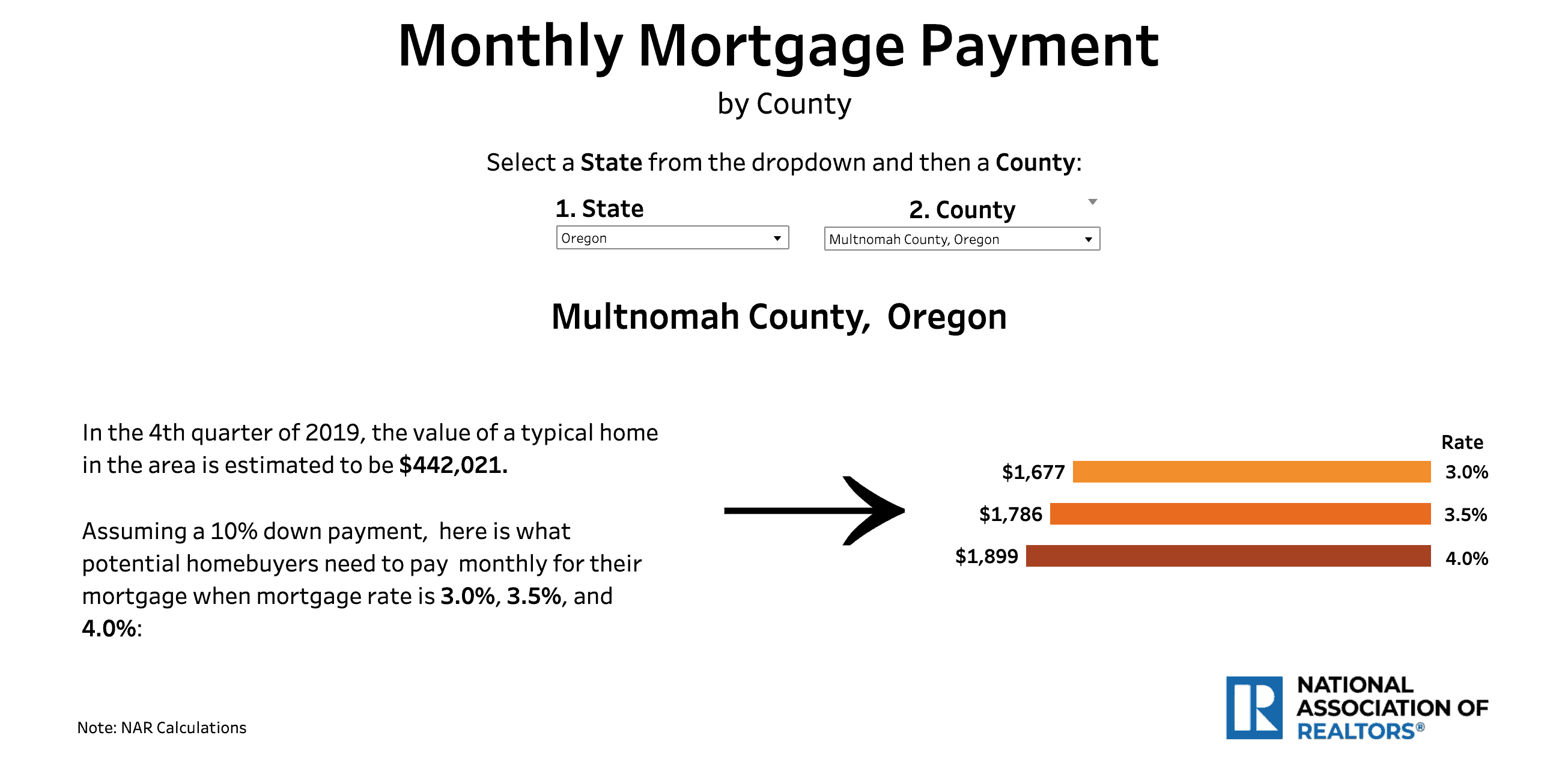
Below is a sample mortgage payment calculation factoring in a 10% down payment with a mortgage rate of 3.0%, 3.5%, and 4.0%. So with today’s historically low interest rates, a buyer’s monthly payment would be even lower.

Monthly Mortgage Payment Comparison (Multnomah County)

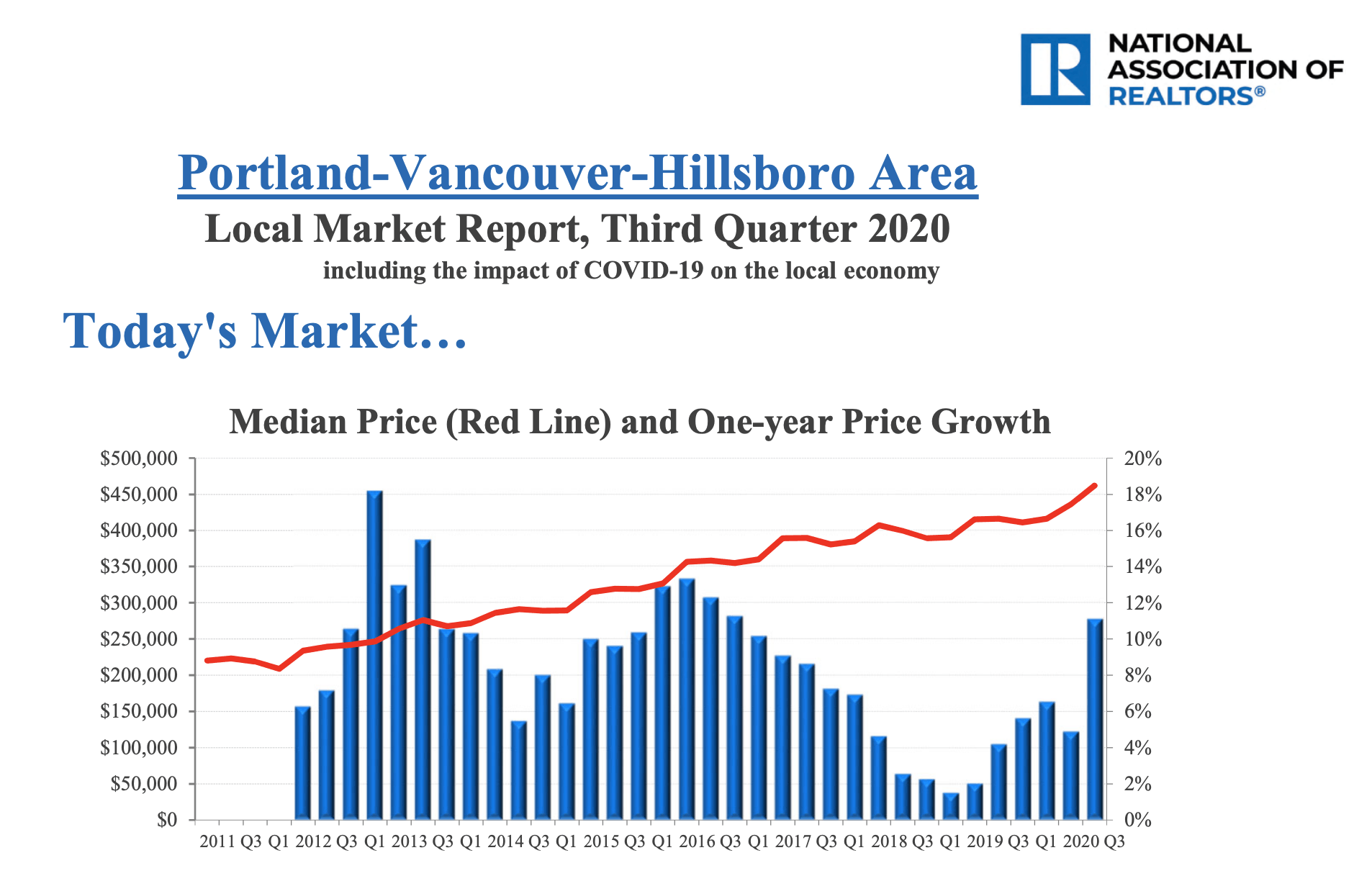
The National Association of Realtors graph below shows us the median price of a home in the Portland Metro area has increased even though we saw a dip in price growth in 2019. The third quarter of 2020 has rebounded considerably. Fourth Quarter 2020 report was not available at time of publishing.

Portland Vancouver Hillsboro Local Market Report – Third Quarter 2020

If you are still on the fence about whether to list now or wait until spring/summer when house hunting is traditionally more lively, contact me today to have a conversation about your concerns. In the meantime, check out my article on being a prepared home seller.

Originally published 12/28/2020

Posted in: Buying A Home, COVID-19, Personal Finance, Portland, Real Estate Tagged: Portland, Real Estate, sellers, selling a home

Why For Sale By Owner Is Not A Good Idea

Smooth ‘Sale-ing’ with Sean

Selling your home yourself might be tempting. Sure, low commission fees and no formal process of purchase might sound like an easy process. But what is the truth about selling your home yourself? Here are reasons why working with a realtor is better than going alone:

Experience

With over 15 years of real estate experience, I have seen a lot—including some surprises with the purchase of my own home. Wouldn’t it be better to hire someone who can anticipate and mitigate bumps in the road? I am trained and experienced in guiding you through the transaction process.

Real Estate Contract Expertise

Your broker is or should be keeping up on the state laws that govern real estate transactions. For example, are you familiar with FIRPTA? Some of the details of the real estate purchase contract are seemingly obscure, but part of the legal process of a sale. How do these rules and regulations impact your investment? Are you a landlord selling your rental property?

All of the legal documents are at your broker’s fingertips. We pay to have access to and use the required standard legal forms. Though tedious and voluminous, the paperwork is in place to protect you, your investment, and your payout. I ensure all the proper disclosure forms are in place so you don’t risk losing your earnest money should a buyer decide to back out. Or worse, a failed sale altogether.

Title Company

Are you equipped to navigate working with a title company? My brokerage and I have established relationships with title companies. The behind-the-scenes preparation influences how smoothly the closing process will go. They ensure all the boxes are checked so your home sale is recorded properly. This attention to detail mitigates errors that if not attended to, may come back to haunt you in the future.

Pricing

FSBOs accounted for 8% of home sales in 2018. The typical FSBO home sold for $217,900 compared to $295,000 for agent-assisted home sales. Source: 2020 National Association of REALTORS® Profile of Home Buyers and Sellers(link is external)

I also provide:

  1. The multi-page, detailed property entry in the Multiple Listing Service (MLS) system. FSBO charges around $400 for this service.
  2. Professional property photography and staging company recommendations so your listing makes that good first impression that is so critical in a competitive market.
  3. Coordination of showings with buyers’ agents.
  4. Installation of a lockbox.
  5. Production and installation of property signage and flyers.
  6. Marketing your property and buying ads and mailers to promote them.
  7. Docusign account, ensuring quick turn-around times on electronic signatures and document delivery.
  8. Access to other resources not readily available to the public.

Why spend time managing these details when you could have an expert handle them for you? While the allure of saving 1 or 2% in commission fees may tempt you, prepare yourself to make the sale of your home a full-time job. As they say, you get what you pay for! Anyone who has cut their own hair knows this to be true–and that some things are better left to the professionals. Contact me to discuss how I can help you with the smooth sale of your home!

Originally published December 16, 2020

Posted in: Buying A Home, Condominiums, Investment Property, Personal Finance Tagged: FSBO

Eight Things To Do Before Buying A Home

Are you ready to buy a house or condo?

Following are eight steps to prepare for this life change in order of priority. Being prepared paves the way to a seamless transaction.

tiny house with keys

Home Buyer Preparedness Checklist

1. Do Not Make Any Major Financial Changes

When you are getting ready to buy a home, and especially when you are under contract to buy a home, do not make any major changes in your life that affect your financial standing. Don’t switch jobs or do things that could adversely affect your finances, like opening new credit cards. Especially when in the transaction, do not buy a new car, new appliances, or furniture. Wait until after the transaction has closed before making any major purchases or life changes. A credit check alone can affect your credit score and may cause you to lose a home, even days before closing.

2. Get Pre-Approved

Getting pre-approved from a mortgage broker enables you to determine what your price range is, while taking into account what down payment you can afford. While pre-qualification is a good idea, having pre-approval is a better indication of your intent to buy. Realtors love working with pre-approved individuals because it shows you are more serious about buying. If you need a mortgage broker, contact me for referrals.

Many home buyers will look to the financial institution that they bank with as the first option when looking for a home loan. It is not the only option, and sometimes may not be the best solution. Mortgage brokers often have many more (hundreds) of options for finding loan solutions that can fit your needs and save you money. I recommend my buyers not only talk to their bank, but also to a mortgage broker and credit unions. Make sure that at least one is a local lender, as they can also know about special state and local lending programs that national lenders may not be aware of.

3. Make a “Dream List”

Compose a list of your requirements for the place you want to buy. Divide the list into things that are deal breakers and factors that are more flexible:

  • Is the school district a priority over your commute (if you have one)?
  • What about walkability score and access to services?
  • Or are you looking for a property that is more remote, because you want the acreage?

Having a defined list of “wants” will provide a clear vision of the property you seek and help your broker in searching out the best options for you. Work with your realtor on this list, and understand that often this list will evolve over the time of your search based on market inventory, price of the house, and other market factors. Browsing listings online can also help. Stop by open houses and drive to locations that you see in your online previews to start narrowing down those search parameters. Check out the property during the day and at nighttime, too.

4. Get A Referral And Start Discussions With A Buyer’s Broker

A buyer’s broker will provide you single agency representation. Oregon does allow for “dual agency”, where a seller’s listing broker can write an offer on their seller’s property for you. Remember though, that the listing broker has a contract with that seller and has a fiduciary responsibility to the seller. Working with a buyer’s broker offers you a real estate professional who has your best interests in mind in the transaction, guiding you through negotiations, inspections, and the entire home buying process. A broker can also help you research market conditions so you can understand the cost of homes in the vicinity of where you’d like to buy. Having comparable sales information helps determine how much to offer on a home.

5. Making An Offer

Once you’ve found a house you like, you’ll work with your broker to make an appropriate offer. Familiarize yourself with the process so you know what to expect. A good buyer’s broker can offer you referrals for home inspectors, contractors, or other professional services. Collect three referrals for each service. Home inspectors help identify any underlying issues your home may have, such as problems with the the roof, plumbing, or electrical system. There is an “Inspection Contingency Period” in Oregon real estate transactions. This is usually a period of ten business days to allow for a whole home inspection. The inspection report helps determine if it’s the right home for you and whether you want to negotiate needed repairs and/or a better price.

6. Home Insurance

Homeowner’s insurance is required when you purchase a home. Shop around to find the best rates. Bundling your home, auto, and other insurance can also be a way to save money.

7. Managing A Contingency Purchase

A contingency purchase is when you want to buy, but your purchase is contingent upon the sale of your home. In the low-inventory market we are experiencing in the Portland Metro area, many people who are looking to sell and then buy again are finding it challenging. Offers where there is a contingency of the sale of a home are at a disadvantage when up against offers that don’t have a home to sell. When the client feels comfortable releasing their contingency, and if selling first, then renting until finding a new home is also an option.

8. Organize Your Household Contents

Start sorting your personal effects now. You have more stuff than you realize, guaranteed. Getting started on purging before packing will enable an efficient and less stressful move.

If you’re also selling, check out my Sellers Checklist. Contact me today to get the conversation going!

Published October 13, 2020


Posted in: Buying A Home, Condominiums, Investment Property, Personal Finance, Portland, Real Estate

Home Seller Preparedness

Selling a home involves many moving parts, so it’s best to be proactive. Start planning upwards of 6 months ahead to avoid rushing at the last minute to complete deferred maintenance repairs, consider your next living arrangement, and be able to time the marketing strategically to local market conditions. Deferred maintenance can affect not only the value of what your home can sell for, it can also affect your time on the market. If you plan on selling without taking care of maintenance that you have not done on the home, then be prepared to price your home accordingly. Getting these critical components in place prior to listing could enhance the value of your home, ensure a smoother listing experience, and mitigate buyer negotiation leverage once you accept that offer.

Create a punch list of repairs.

Using an Excel spreadsheet, a pad of paper, or your smartphone or tablet, go room by room identifying what repairs are needed.

    1. Windows open and close easily.
    2. Install GFCI certified outlets.
    3. Doors close and doorknobs turn easily.
    4. Chipped or nicked trim?
    5. What else?

Perform a deep clean

Closets, oven, range, refrigerator (pull it away from the wall to vacuum the coils), carpets/hardwoods, windowsills, chandeliers/fixtures all need attention.

Hire a professional painter

Liven up the walls and doors inside and outside with fresh paint. When you’ve lived in a place for a while, your mind begins to ignore little inconsistencies. A new visitor to your home will notice these details, so keep in mind they contribute to the overall first impression. A professional painter can help repair cracks in ceilings and walls as well.

When getting your interior or exterior ready to be painted, think base colors like creams and whites for your paint colors at time of sale. You may love that purple colored room for your own use, but these more extreme colors can influence a buyer’s interest in your home. Provide the new buyer with a fresh palette to introduce their own color scheme to their new home. This one preparation can save you on market time, putting more money in your pocket at closing.

Install new smoke and carbon monoxide detectors

Oregon law requires new detectors to be installed. There are some affordable smoke and carbon monoxide detectors available at your local hardware store.

Landscaping

It’s all about curb appeal! The first impression is usually the last.

  • Prune, weed, clear brush, mow, lay down fresh bark mulch.
  • Hire an arborist to shape existing trees (never refer to it as “thinning” a tree). In fact, this should be done even if you’re not selling!
  • Having a tidy home on the outside bodes well for the inside.

Assess the roof

One of the most overlooked components of selling a home is the roof condition. Inspectors will assess the condition of the roof after you receive an offer, so if repairs or even replacement are necessary, it will mitigate the need for negotiation on the price of your home while saving time on repairs already completed.

Organize Documents

Have your paperwork and invoices available for work you’ve had done on your home. If you had work completed by a contractor that required a permit, verify all permits were finalized with your local bureau of planning and permitting. You don’t want to get into a transaction on your home and have an open or voided permit come into question. If a final inspection was not completed, you may have to open walls, cut into sheet rock, or pull up flooring so as to prove to a city inspector that work was done to code. Avoid a potential nightmare in the middle of a real estate transaction.

If selling a condo, line up all your HOA governing documents and proof of insurance. Your management company may have a login to access documents electronically. Request access for your yourself and your agent, so a tedious yet critical detail is taken care of in advance.

Appliance Check

Ensure all appliances are in clean and working order. If there are any dings to the enamel, thermometer adjustments needed in the oven, thaw a freezer, replace the dryer lint filter, or anything else you find, these will be good to have taken care of before people start viewing your home.

Staging

Consider coordinating a staging company with your broker as the final step in preparing to sell. Staging will showcase your home to people who may not have an imagination or need a physical visual in order to imagine themselves having the lifestyle you’re selling. Part of staging involves decluttering and depersonalization. You want the new buyer to imagine themselves in your home, not what it was like for you to live there. Another side benefit? Packing up personal items saves you time for when the real move happens.

Photography

Use a professional real estate photographer. They have the digital technology to deal with minor touch-ups, enhance lighting, and streamline your photos for use in virtual tours and/ or 3D tours.

Pricing your home

Your broker should provide this “apples to apples” home sales comparison of properties within a mile or less and over the last 3-6 months. This information helps determine the best listing price. Keep in mind the market determines the actual sales value of your home.

Strategy

Pricing your home too high can cause the home to stagnate on market and necessitate a price reduction. Don’t wait too long to consider a price reduction if showing activity is not producing an offer. If you have been seeing double-digit numbers in showings without an offer, then a price reduction should happen within a few weeks. Perception is reality. If buyers see a home on market for more than a few weeks, their perception can be that there is something wrong with the home.

Portland is also known as a “polite market” where buyers will usually not make offers on homes they think are overpriced, so as to not upset the seller with a lower offer. Buyers in the Portland Metro area will often wait for the seller to make a price reduction before submitting an offer. Real estate values can be unpredictable, so keep an eye on factors like the state and national economy, unemployment rate, interest rates, and other factors.

Showings

Be ready to accept raw feedback about your home. You have memories and emotions attached to your property, so it’s best to remember to try to not take constructive criticism personally.

Create a showing schedule with your real estate broker that works both for you. Maximize the availability of the home to buyers to see your home, such as evenings, after work, and weekends.

I’d love to learn more about what your greatest challenges have been when selling your home. Did I miss anything on this list? I look forward to hearing from you.

Published September 10, 2020

Posted in: Condominiums, Home Improvement News, Personal Finance, Portland, Real Estate Tagged: sellers, selling a home

Buying and Selling Real Estate in the Time of COVID-19

man standing in front of real estate sign wearing a protective maskIf you are hesitant about whether to buy or sell a home right now during a global pandemic, you’re not alone. Real estate business is considered essential, so under the Governor’s orders, we are continuing to conduct business. But, it is not business as usual. The concerns about transmission and infection are real. Real estate transactions have always been a very personal process requiring a lot of one-on-one time together. With the new reality we face, the process is still personal, but with less contact.

Some of the precautions I am taking to keep you, your family, myself, and my family safe are:

Masks

I wear a mask at all showings and transactions. I recommend my clients do the same.

Gloves

Switching lights off and on, door knobs, windows, any surface that is usually touched, I do so with gloves on. I throw the gloves out after each use.

Disinfectant Wipes

I make these available at my listings and carry them with me in my car. I am diligent about wiping down all surfaces that have been touched (even with gloves on) after a showing.

Physical Distancing

While it can be challenging to maintain a distance of six feet from each other, I offer live video conferencing tours of properties if you do not wish to meet at a home in person.

Virtual Tours and Staging

I include 360 virtual tours on my listings and offer virtual staging. The 360 virtual tour is a 3D-style walk-through using professional photography. It is not a replacement for the physical visit, but it is a close approximation. Virtual staging is where furniture is digitally placed into images of the space. This helps minimize the amount of time and people required in a space.

If you can or need to buy or sell, business is still happening. I am taking all the precautions to minimize/eliminate exposure, so you can transact with confidence. If you are hesitant to proceed, please contact me so we can have that conversation. It is important to me that you are comfortable and confident when making lifetime decisions.

Posted in: Buying A Home, COVID-19, Investment Property, Personal Finance

Eight Ways to Uncover Cash You Always Had

What if your own money was just waiting there for you to notice it?

Here are eight ways to uncover some cash you might have forgotten about or never knew you had:

via GIPHY

Published December 24, 2019

1. Unclaimed Property

Check with your state’s Unclaimed Property website to see if you have any uncashed checks, customer credits (for example, from a utility after a move), inactive bank accounts, and unapplied deposits. The State of Oregon also has a database to search for unclaimed military medals and insignia. 

2. Venmo and Paypal

When was the last time you logged into these accounts? That time you had to set it up for an online transaction or an ebay sale or purchase might have left you with some leftovers. It might be time to update your password and email anyway, so go ahead and take a look.

3. Escrow account

Do you pay your property tax out of an escrow account along with your mortgage payment? Has your property tax ever fluctuated? Then you might want to call your mortgage company’s escrow department to see if there’s an overage that could be disbursed.

4. Credit Card Statements

Do you check your credit card bill line items each month? If not, go ahead and take a peek to see if there are any recurring charges. Are you still wanting to donate $50 on a monthly basis to a charity that might not be as active as it once was (and if so, are you deducting that from your taxes)? Or do you subscribe to a training website that you’ve never used? Yes, I know that example is super specific! Check it out to see if there are any automatic payments you’re making that you’d like to adjust.

5. Credit Card Cash Back and Points

If you have a cash back credit card, have you checked to see how much you have banked? Discover Card links with Amazon so you can apply cash back funds towards your purchase. How about your points? It’s possible your next vacation may be funded already. If you have an Alaska Airlines credit card, be sure to take advantage of their annual companion fare, too.

6. Netflix/Hulu/Amazon

This is in line with the Credit Card Statements idea, but you will want to check with your partner and/or housemates about who is subscribing to what. A friend told me she and her husband both had been subscribing to Hulu, so when she called about it, they credited her with 7 months’ worth of charges. $85 is a nice bottle of wine (or two or three)!

7. Cable/Internet/Phone Bill

When was the last time you checked your cable bill to see if you want to continue subscribing to channels you’re being charged for? At any time over the course of your contract, you can call to see if your provider has any promotions. I’m not saying you should go so far as to threaten to cancel (though some report this as an effective tactic), but a phone call to see what’s being offered might surprise you. Accepting a new deal may kick you back to the beginning of a 3-month, one-year, or two-year contract, so be sure to mark on your calendar when the time is almost up to make adjustments or another call. And sure, phoning the cable company is hardly a joy, but if it saves you a few hundred dollars, that’s a few hundred dollars for a half hour’s worth of work.

8. Coat Pockets

And finally, while not the most reliable or recommended way to save money, do check all your old pockets—pants and coats alike—before donating. There are some pretty whacky stories out there about what thrift store shoppers and clerks have found!

What are some ways you’ve uncovered cash? Drop me a line and let me know!

Posted in: Personal Finance Tagged: credit card points, escrow account, finding cash, unclaimed property

Quick Search

About Sean Besso

Whether you are an experienced investor or a first time buyer, I can help you in finding the property of your dreams. Feel free to browse through my profile and please don't hesitate to reach out for any of your real estate needs! Meet Sean...

Client Reviews

Impressed with his social, professional and articulate manners. Very responsive to requests. Easily explains situations and information in a format that can be quickly understood and processed by individuals outside of the real estate profession. Enjoyed the experience and learned so much.
- Dan Shoop


More Testimonials

Get in Touch

Sean Besso Broker
Licensed in the State of Oregon
2207 NE Broadway Ste. 100
Portland, OR 97232
Call Us: (503) 444-9008
© 2026 · Sean Besso Broker

Privacy

Privacy Policy | Sitemap | DMCA

Agent Reputation | Real Estate Website Design

Marketing | Order Order
Log in